
A holistic site assessment that de-risks projects, improves resilience, leverages nature's free engineering to save costs, and inspires genuinely regenerative design. A LIVING
STORY
The living story is a pre-design strategy that helps you make the right decisions by asking the right questions:
What does the land and its people want to do?
What will they permit us to do?
What will they support us in doing?
What will they inspire us to do?
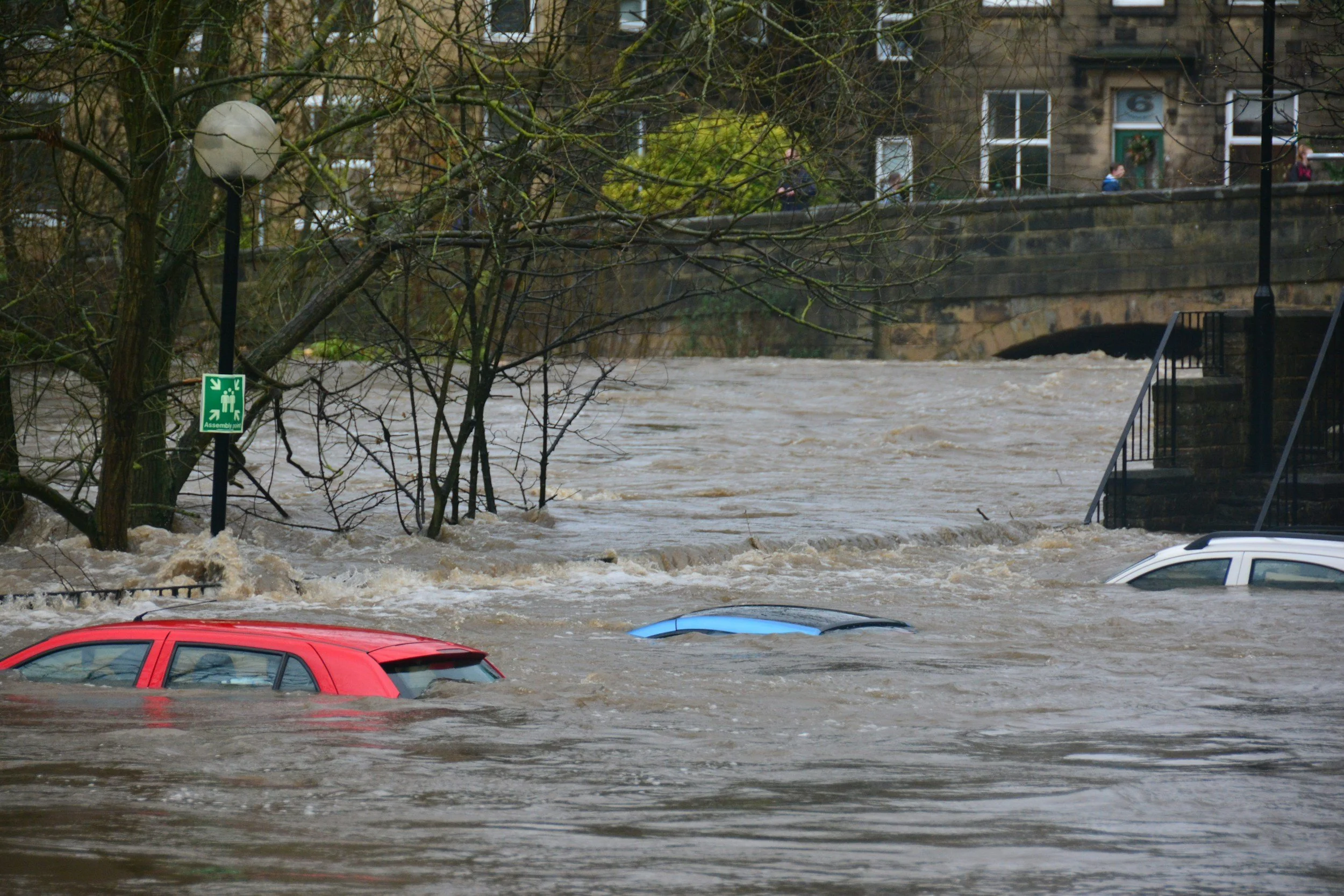
The PremiseIt's expensive fighting nature. If we don’t understand the place's natural social and ecological trajectory, we risk wasting time, money, and energy fighting systems. The best designs are those that dance with the natural trajectory of a place. And that let nature lead.
❋ Living/Systems ledWe let nature dictate our design framework — creatively and holistically reading the land through ecological, climatic, and cultural lenses to discover what it is already doing, how it may support us, and how we may fit in.
❋ Human/Nature engagementWe view humans as nature and use a diversity of perspectives to enrich the Living Story - elevating Indigenous knowledge, community wisdom, and lived experience as essential data.
❋ Western + Indigenous ScienceWe bridge Indigenous and Western Sciences through the lens of biomimicry - using a variety of computational techniques and storytelling to craft the Living Story of Place.
❋ Visual + Plain LanguageOur Living Stories have led to faster approvals, new products, frameworks for design, and more funding. A visual and plain language product that can be used to sell, communicate, and advance projects.
We live because everything else does. Richard Wagamese
Our PhilosophyOur breath feeds trees. Our bodies feed soil. Why can’t our buildings feed their ecosystems?
We have not been designed to exist apart from nature - we are part of it. Yet most of our built environment is designed as if the land were an obstacle to manage, and the best we can aspire to is "less harm."
The Living Story begins with a different premise. Humans are not inherently destructive. Our designs can go beyond harm reduction and become genuinely regenerative - creating conditions where all life thrives, where our presence becomes a contribution rather than a burden.
Biomimicry gives us the lens. Over 3.8 billion years, natural systems have been refining strategies for how to thrive: building resilience through diversity, running on free energy, producing no waste, creating conditions for more life. This is not idealism. It is engineering genius waiting to be applied.
The Living Story operationalizes biomimicry as a front-end advisory service. Before a shovel goes in the ground, before a plan is drawn, we listen. To the land, to its history, and to those who have known it longest - through both ecological science and Indigenous knowledge.
We look at historic, current, and future conditions from multiple scales and perspectives. We ask: what does this land want to do? What will it support? What will it permit? Then we design to align with and enhance that trajectory - instead of using unnecessary energy fighting it.
Through deep research and a global practice, we are using the Living Story to learn how to dance with the land, to add to its beauty, and to save time, energy, and money for our clients. Because we know it is expensive to fight nature.
INDIGENOUS-LED
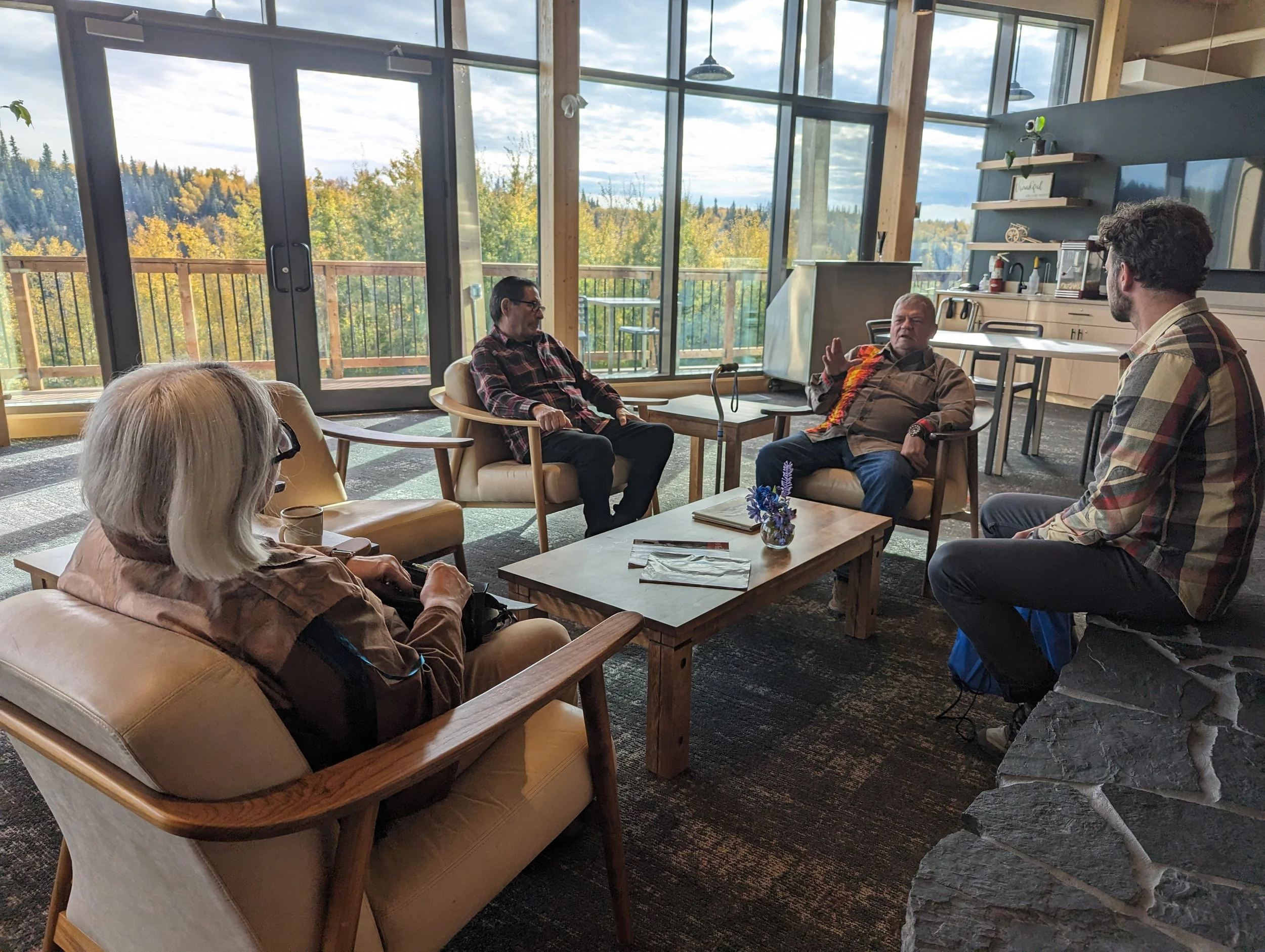
We know that if we want to learn how to work with the land, our process ensures we speak to those with the longest-standing relationship with the land. As our Elder shared, her people “have been doing biomimicry for thousands of years.” We use biomimicry as a bridge to reconciliation and as a tool to bring Western approaches closer to Indigenous Knowledge.
How It Works-
Desktop data collection & ecological analysis
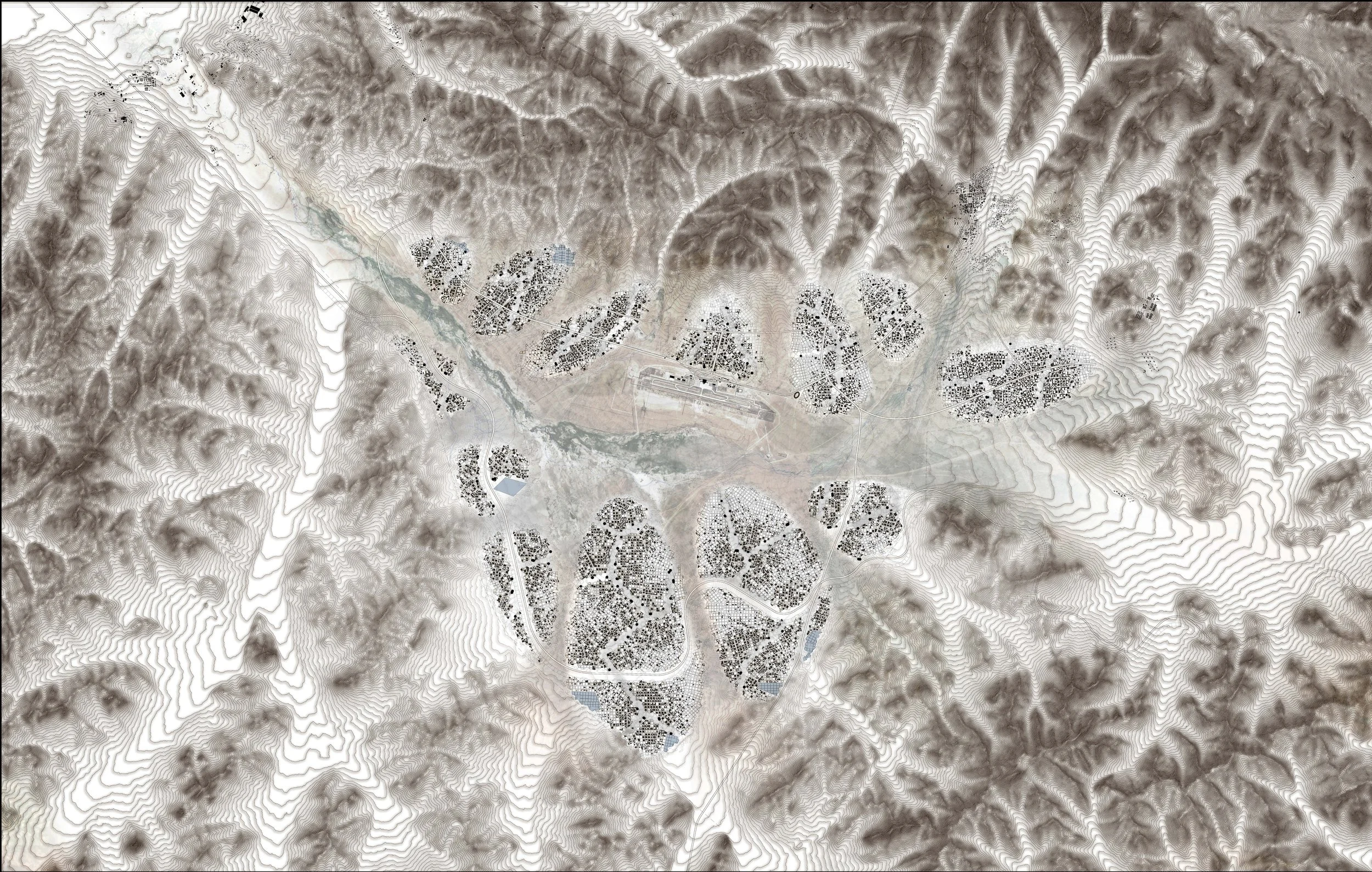
A holistic site analysis at macro-to-micro scales: land and terrain, flows and climate, ecology and natural capital, and human systems and legacy. GIS mapping, climate projections, existing reports, and cultural context build a comprehensive baseline — revealing risks, opportunities, and underutilized ecological assets across historic, current, and future conditions.
-
Patch model & ecological zones
Higher-resolution understanding of the place — delineating primary ecological patches (forest interior, riparian, rocky, built interface), assessing connectivity corridors and patch condition. This reveals where the land is resilient, where it is stressed, and where design intervention can regenerate.
-
Climate change risk assessment
Review of climate projections relevant to the site: heat, precipitation intensity, flooding, wildfire, species distribution shifts. We identify the most exposed habitats and communities, and locate where nature's free engineering — wetlands, forests, soils — can reduce risk before it becomes infrastructure cost.
-
On-site review & stakeholder engagement
Structured walkthrough across key habitat zones with photographic documentation and stakeholder interviews. We engage those who know the place best — including Indigenous communities and knowledge holders — not as a consultation footnote but as a foundation. To understand a place, we walk with those who have had the longest relationship with it.
-
Ecological performance assessment
Quantification of baseline ecological services: carbon sequestration, urban heat reduction, stormwater retention, air quality, oxygen production, soil carbon, biodiversity. We establish what the land currently provides and set measurable targets for what the design should enhance — moving beyond sustainability into active contribution.
-
The Living Story report
A visually-led, plain-language document synthesizing all findings: site narrative (ecological and cultural), climate risk map, ecological performance summary, socio-ecological narrative, opportunities and constraints analysis, and biomimicry design principles derived from the specific place. This document becomes yours — the framework all future decisions are evaluated against and all future stories can be added to.
Example StoriesMétis Crossing
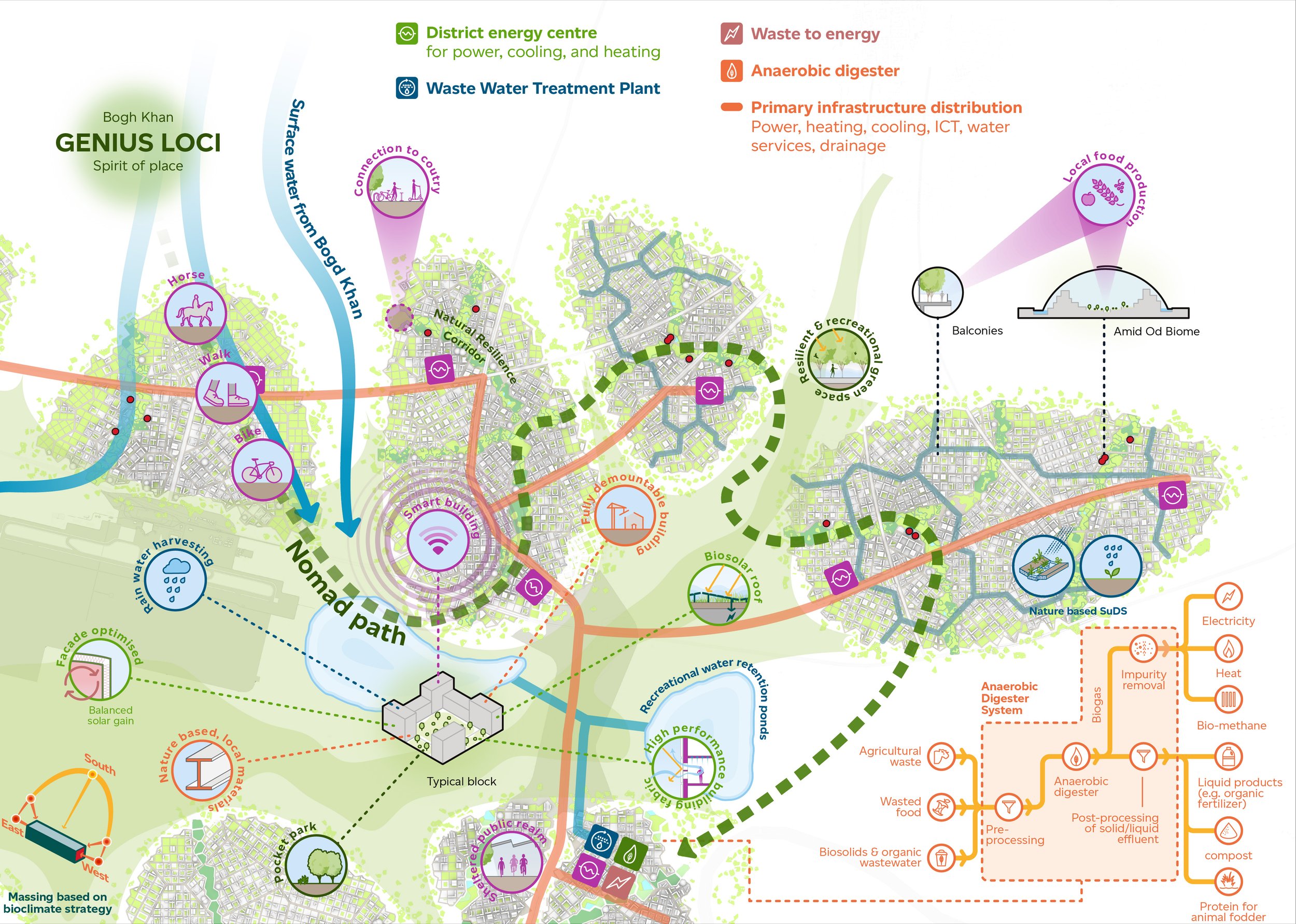
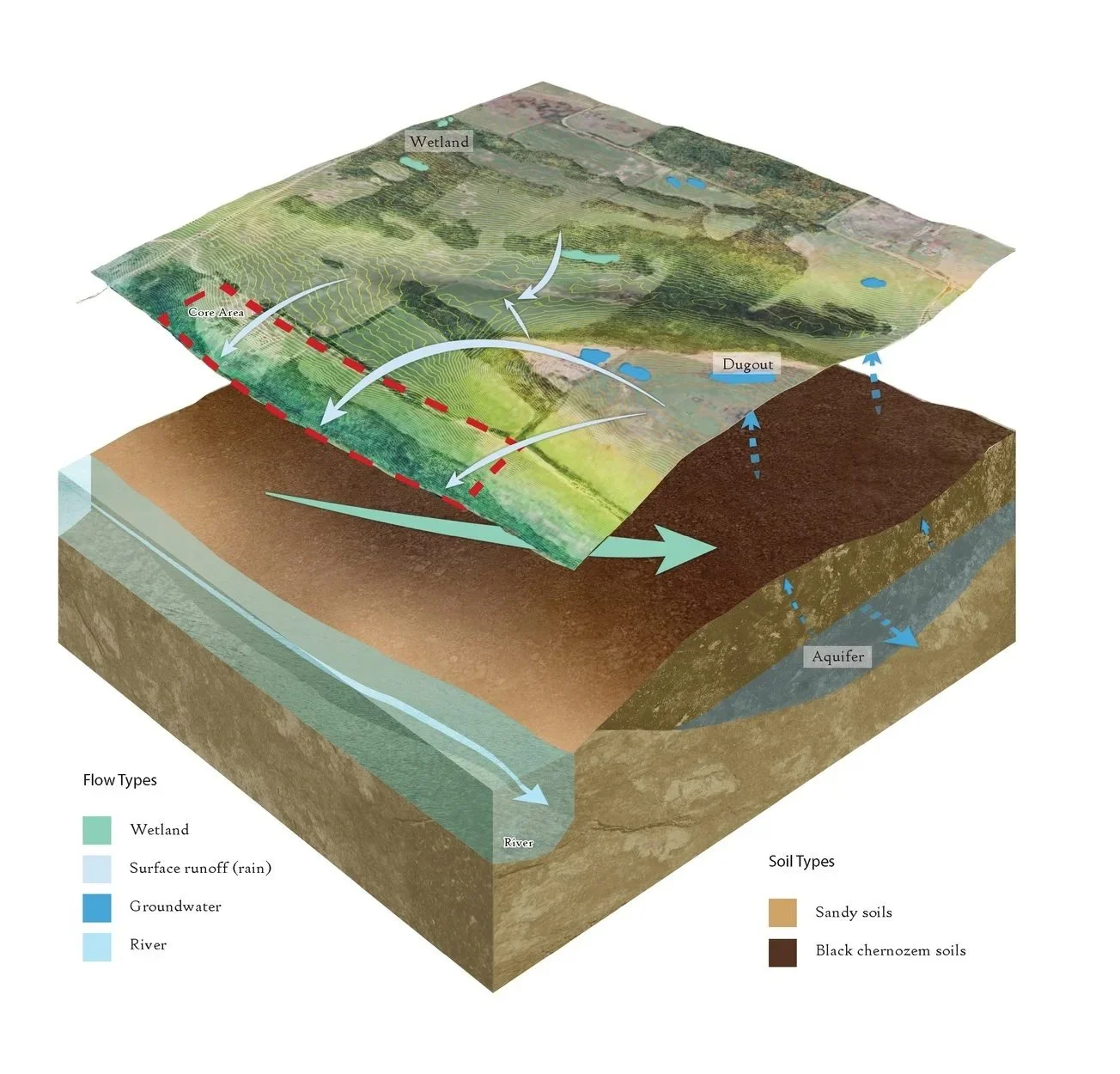
Métis Crossing is Alberta's first major Métis cultural destination, and the physical expression of a culture's resurgence. The infrastructure decisions made here around energy, water, wastewater, roads, food production, needed to reflect Métis values, perform under real-world climate pressures, and support a growing institution over generations.
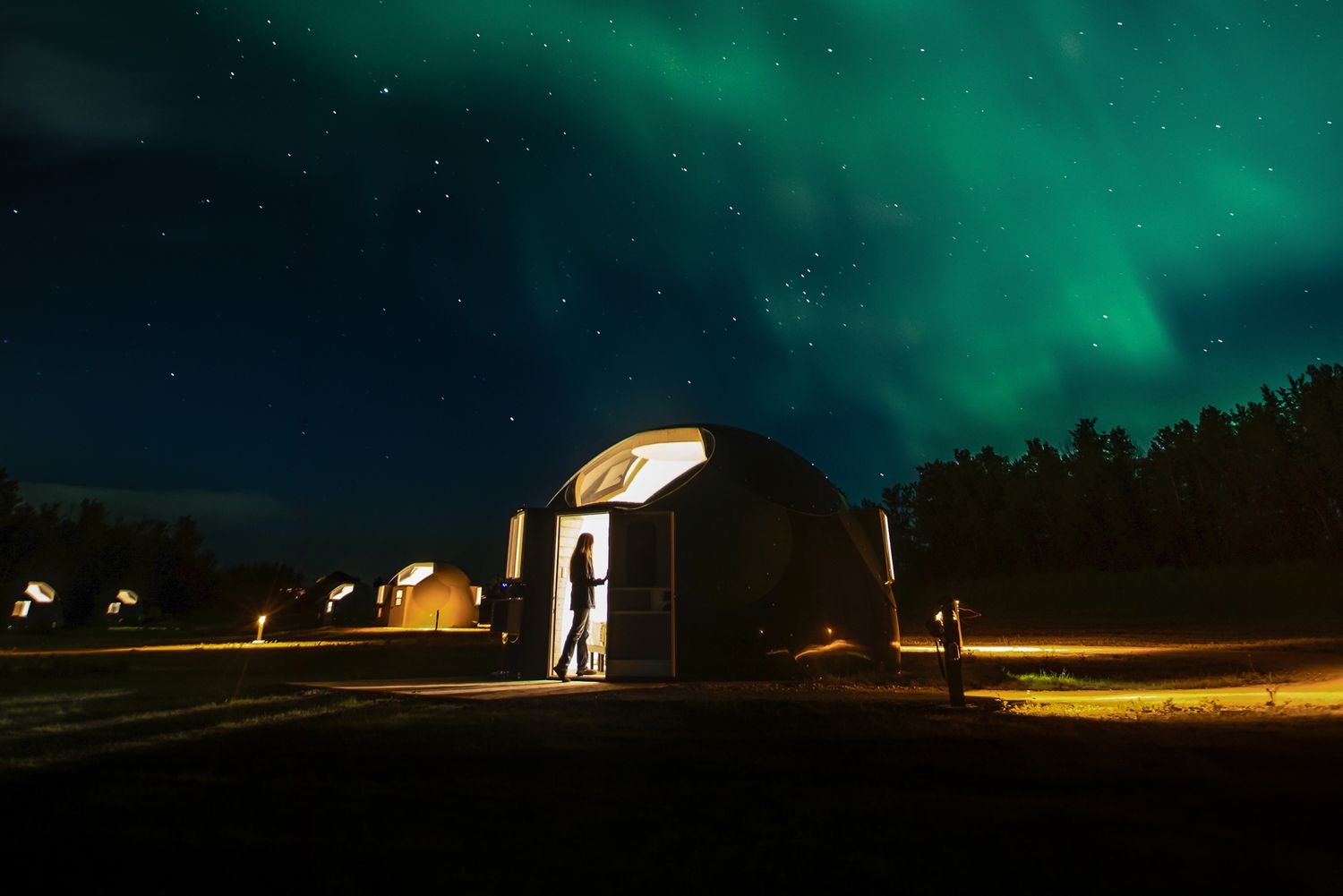
The Living Story was built from Indigenous knowledge first. Four seasons of on-site presence, direct engagement with Métis Nation members, Architects, and Elders, and a deep mapping of the land's ecological systems established how the land functioned and what it would support. Indigenous knowledge of seasonal water behaviour, land use history, and ecological relationships was primary data for all design decisions. That understanding shaped every infrastructure decision: where systems were sited, how they were sized, how natural functions were incorporated as engineering assets. Through “two-eyed seeing” the team leveraged the Living Story to design roads, lighting, future buildings, animal paddocks, skywatching pods, circular strategies and agricultural infrastructure for this innovative, autonomous, community.
The Living Story shaped the infrastructure master plan, avoiding areas of flooding, proper locations for infrastructure, and inspiring nature-based climate solutions. The Living Story product is being sold in the gift shop, shared with dignitaries, and a part of the boutique hotel experience.
ProjectInfrastructure Master Planning
LocationAlberta, Canada
Size278 ha
Statuscompleted 2026
Kalukalu @ 1624
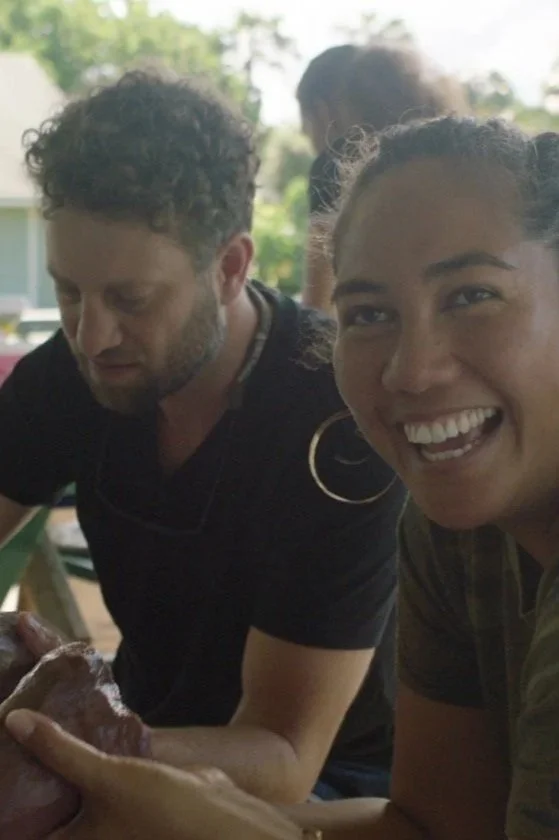
Kaua'i Federal Credit Union wanted to establish an economic resilience center in a highly complex socio-economic and ecological context. They bought an old furniture building with the intention of repurposing it into Kalukalu @ 1624. However, the island's climate risks, resource dependencies, and the depth of Native Hawaiian cultural relationships to the land would all shape what was viable for the regeneration of this building.
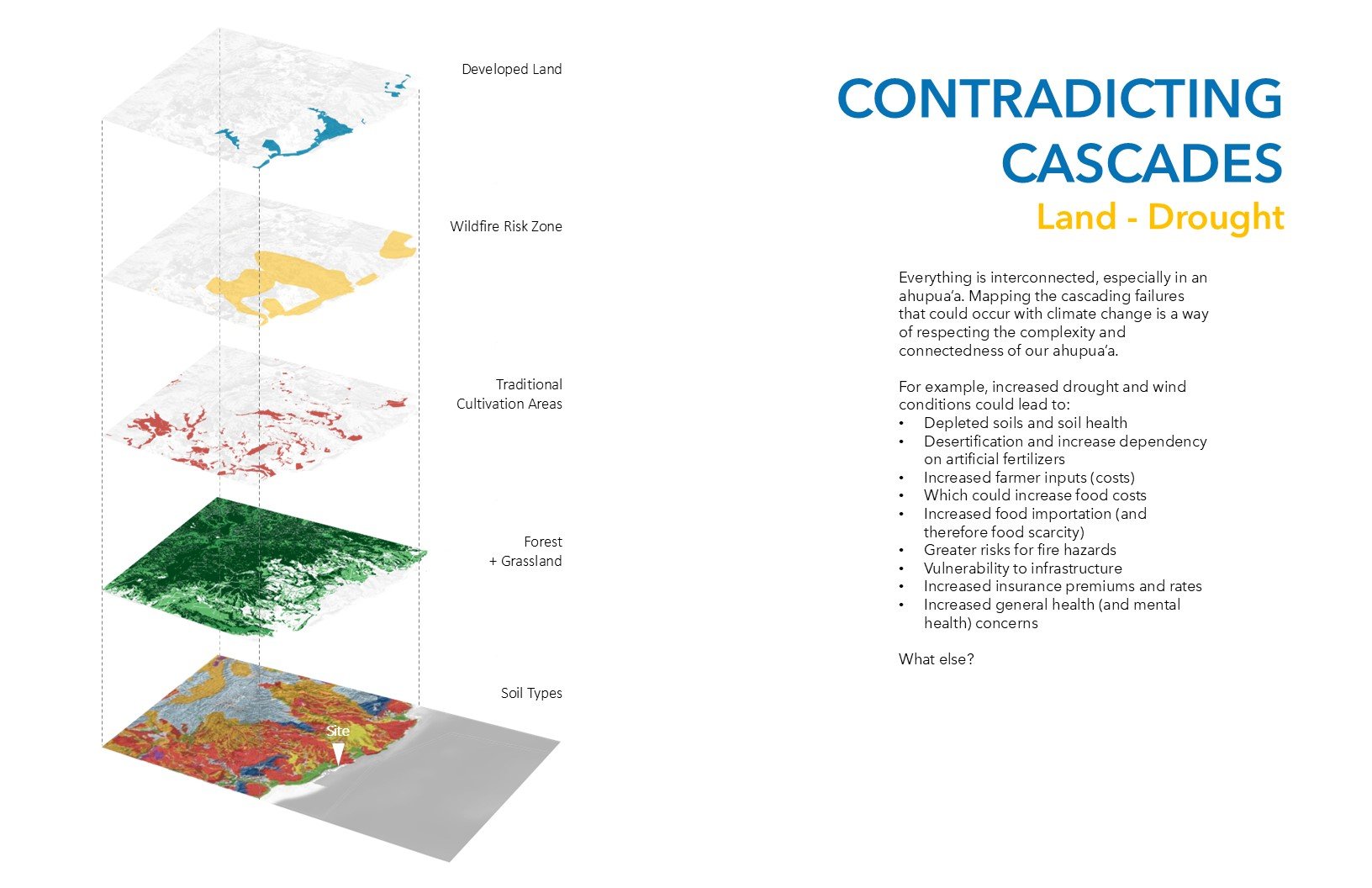
The Living Story took the client through a structured process of understanding the system they were operating within before any decisions were made. We conducted a comprehensive socio-ecological assessment that identified systemic risks and opportunities across economic, land, and community dimensions. Indigenous engagement was built into the methodology from the start - not as a consultation step, but as a primary analytical input that shaped how risks were identified and what opportunities were visible. The ahupua'a system of watershed stewardship - encoding thousands of years of place-specific ecological knowledge from cloud forest to coast - was incorporated as a primary analytical framework. The outcome was a framework that gave landscape architects, architects, and program managers a shared understanding of the site and a coherent set of criteria to design with.
The Living Story became a judging criteria for RFPs, ensuring that all proposals were adhering to, and adding to, the Living Story of Kapa’a and Kaua’i.
ProjectAn Economic Resilience Center
LocationKapa’a, Kaua’i
Size20,000 ft2
Statuscompleted 2025
CABN NET ZERO COMMUNITY
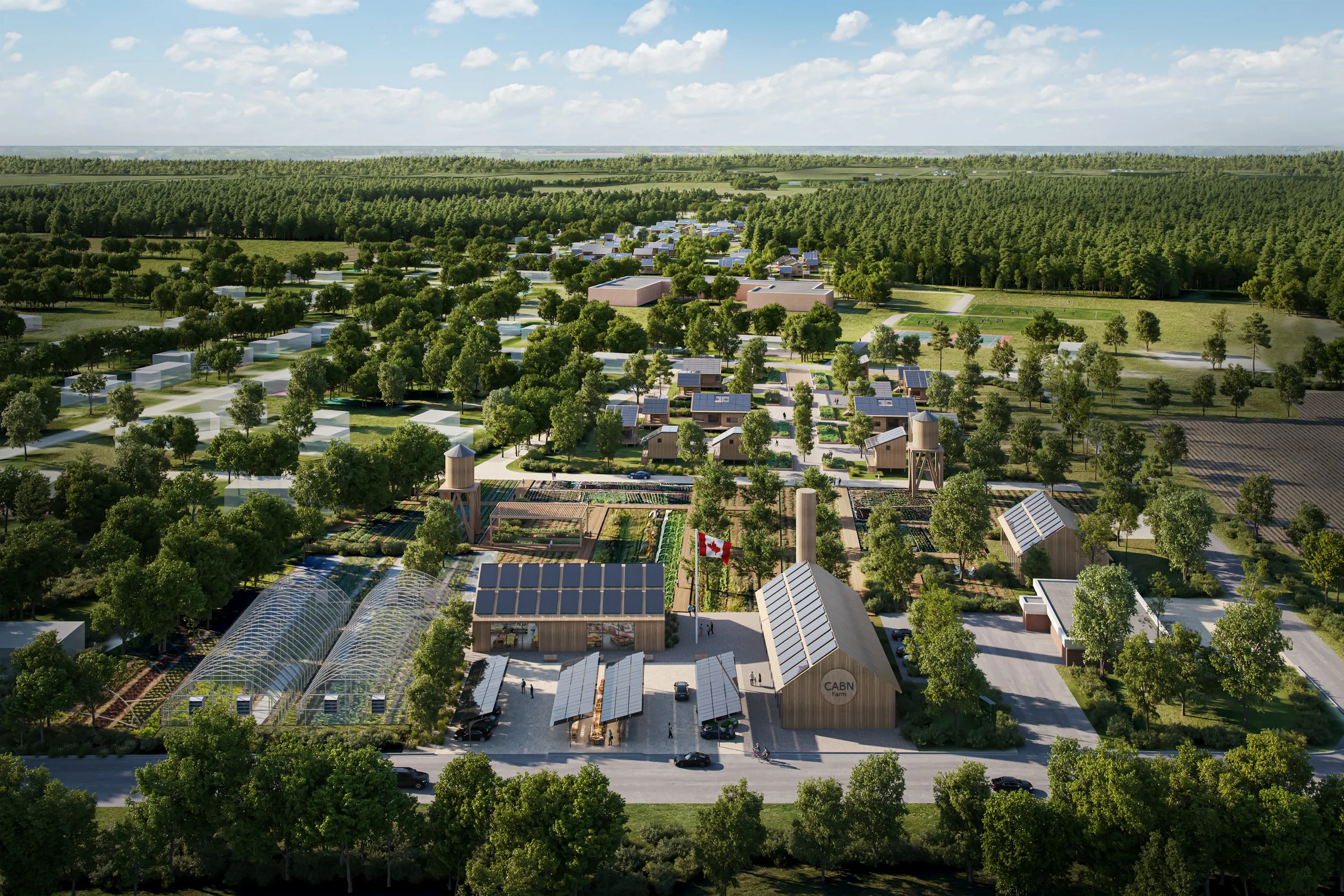
CABN had a strong product - modular, net-zero residential buildings - and wanted to scale it into a full community that could generate public interest, move through approvals, and establish a market position distinct from conventional development. The challenge was doing this on a site with significant ecological assets without those assets becoming a liability in the approvals process or a cost in the development budget.
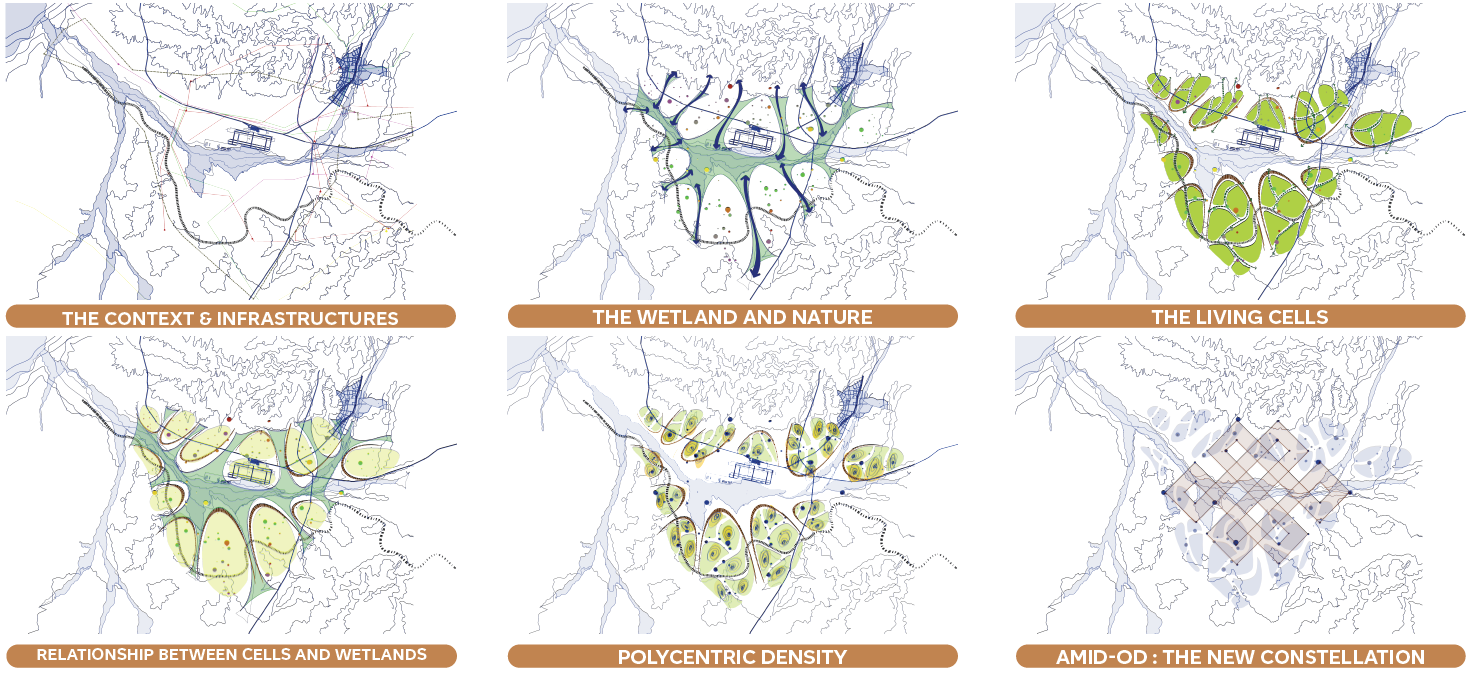
The SES assessment established that the site's 41 hectares of wetlands and forest were performing stormwater management, carbon storage, and biodiversity functions that would cost significantly more to replicate through engineered systems. Protecting them was the most cost-effective option - and the one most likely to generate approvals momentum and public support. We structured the development to leverage that ecological asset: a distinctive community identity rooted in place, ecological performance benchmarked and documented, and a planning submission backed by measurable environmental evidence. We also learned from the resilience of ants to inform our clusters, ensuring greater social cohesion, connection, and resilience.
The holistic and comprehensive nature of the Living Story led to greater buy-in, faster approvals, and multiple municipalities wanting to emulate the process.
AwardsProjectVillage Vision Masterplan
LocationAugusta Township, Ontario
Size64 ha
Statuscompleted 2024
2025 AZURE People's Choice Award
2025 AZURE Concept Master Plan Award
2024 WAFX Ethics and Value Award
2024 World Architecture Festival Finalist