THE 21st CENTURY VILLAGE
A living prototype for Canada’s next 5,000 villages.
The Bigger Vision: Beyond the Subdivision
Canada needs homes. But if we focus only on producing housing, we risk repeating one of the deeper failures of modern development: creating places for people to live without creating meaningful ways for them to belong.
The conventional subdivision is efficient at dividing land, moving cars, and repeating houses. But it often separates living from working, people from food and nature, and neighbours from one another. We build the roads first, install the infrastructure, sell the lots, and hope community follows.
The outcome is disconnection.
A 2025 Statistics Canada study identified commuter communities outside Canada’s largest cities as being at greatest risk of lower life satisfaction and weaker community belonging. In Ontario communities such as Halton Hills, Whitchurch-Stouffville, and Orangeville, just 38.5% of residents reported high life satisfaction, compared with 50% nationally.
50%? That’s not so good either. Only half of Canadians report high life satisfaction?
A village cannot solve mental health and happiness on its own. But the places we build can create—or remove—the everyday conditions for purpose, connection, and belonging.
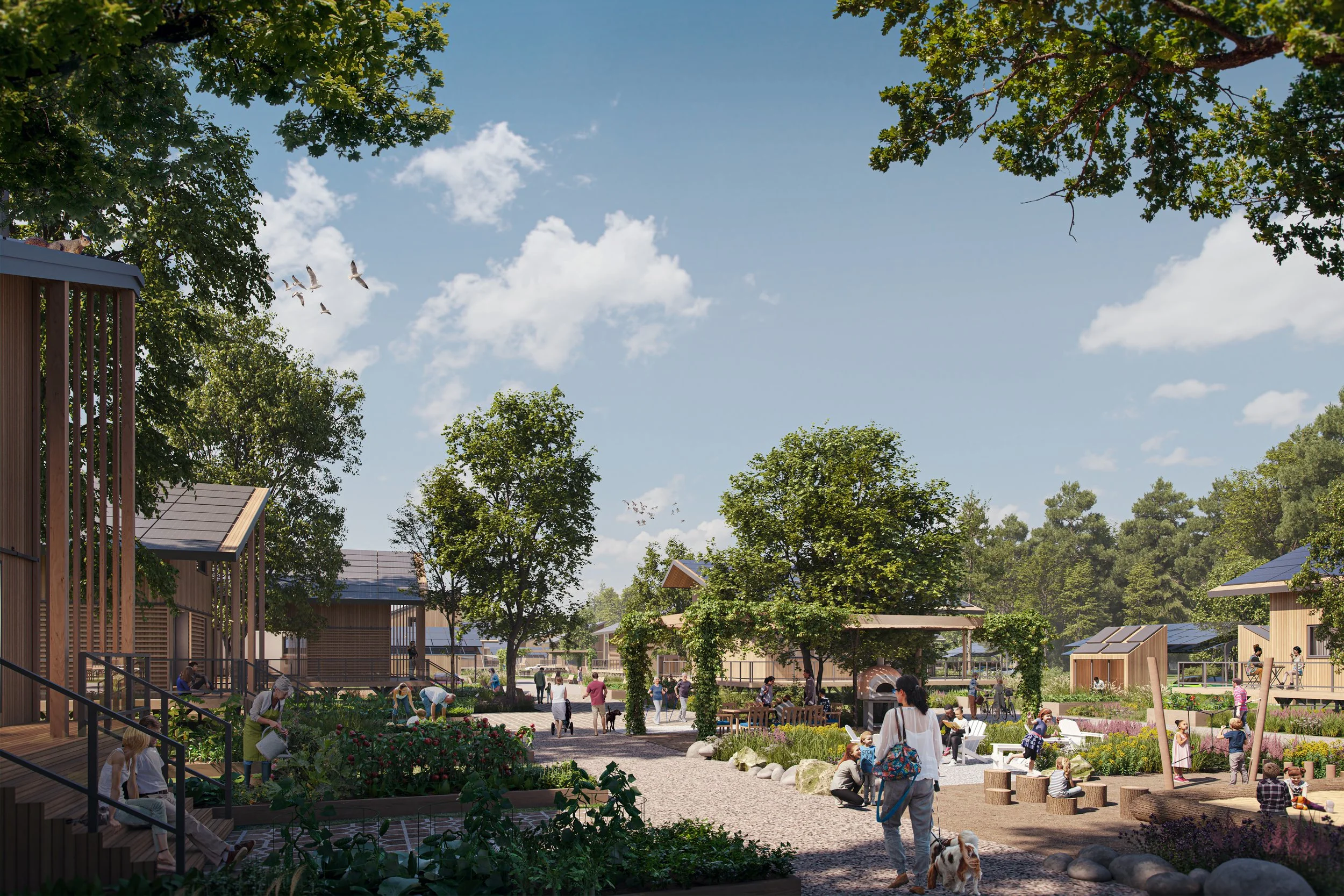
Our vision for New Lowell is to recover the village as a unit of Canadian life. Across approximately 500 acres, the ambition is to create communities where entrepreneurship exists within a civic mindset: where people turn hobbies into vocations, businesses strengthen the community around them, and young people grow up as participants rather than consumers. It’s a place where we can create more Life.
The land is already held in trust. The objective is not to maximize its short-term extraction value, but to cultivate value over generations. New Lowell is intended to become a prototype for 5,000 future villages—each different because each emerges from its own people and place.
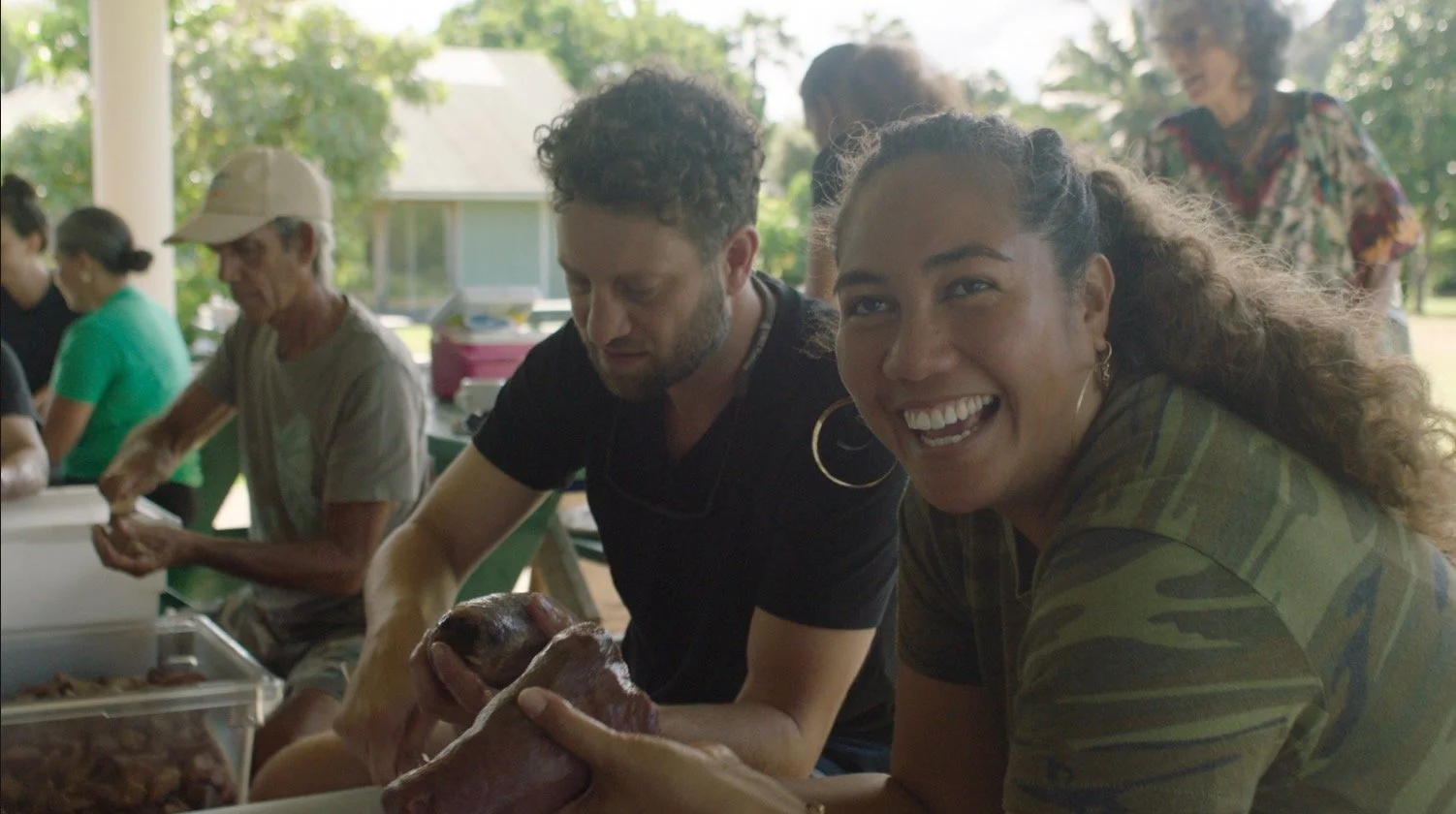
Community event harvesting and preparing food together
The First Village: Planting the Seed
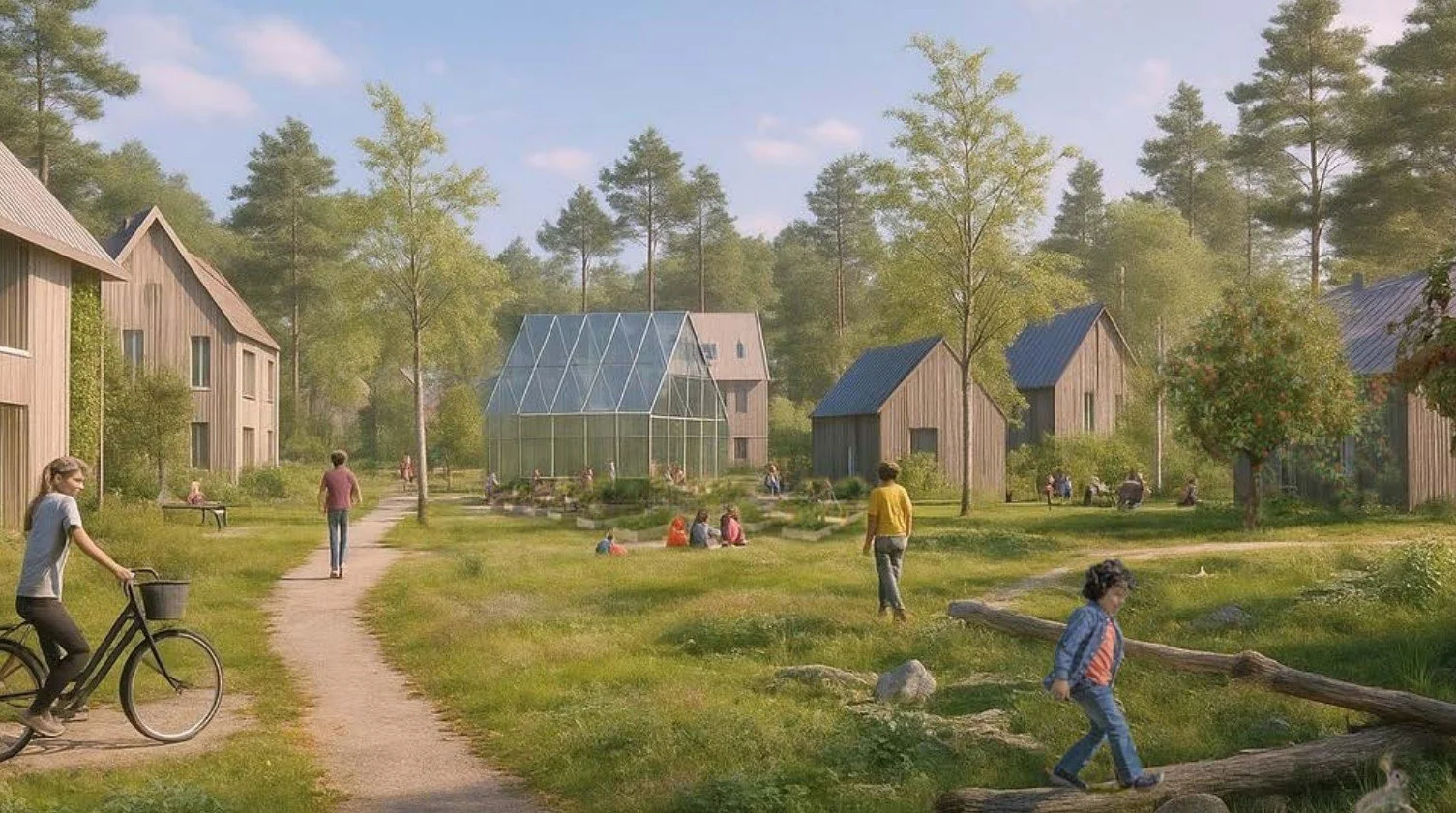
The first prototype begins on 56 acres of agricultural land connected by Coates Creek to the Minesing Wetlands. Its high water table, vulnerable aquifer, surrounding woodlands, and history of agricultural disturbance form the beginning of the design.
Through our Living Story process and 99-point Regenerative Checklist, we studied the layers and granularity of the land—its water, soil, ecology, history, climate, resources, and relationships. We asked what the land wants to do, what it will support, what it will permit, and what it might inspire.
The village strategy follows ecological succession. Begin with small interventions. Plant essential services. Observe what happens. Learn, adapt, and allow the next stage to emerge.
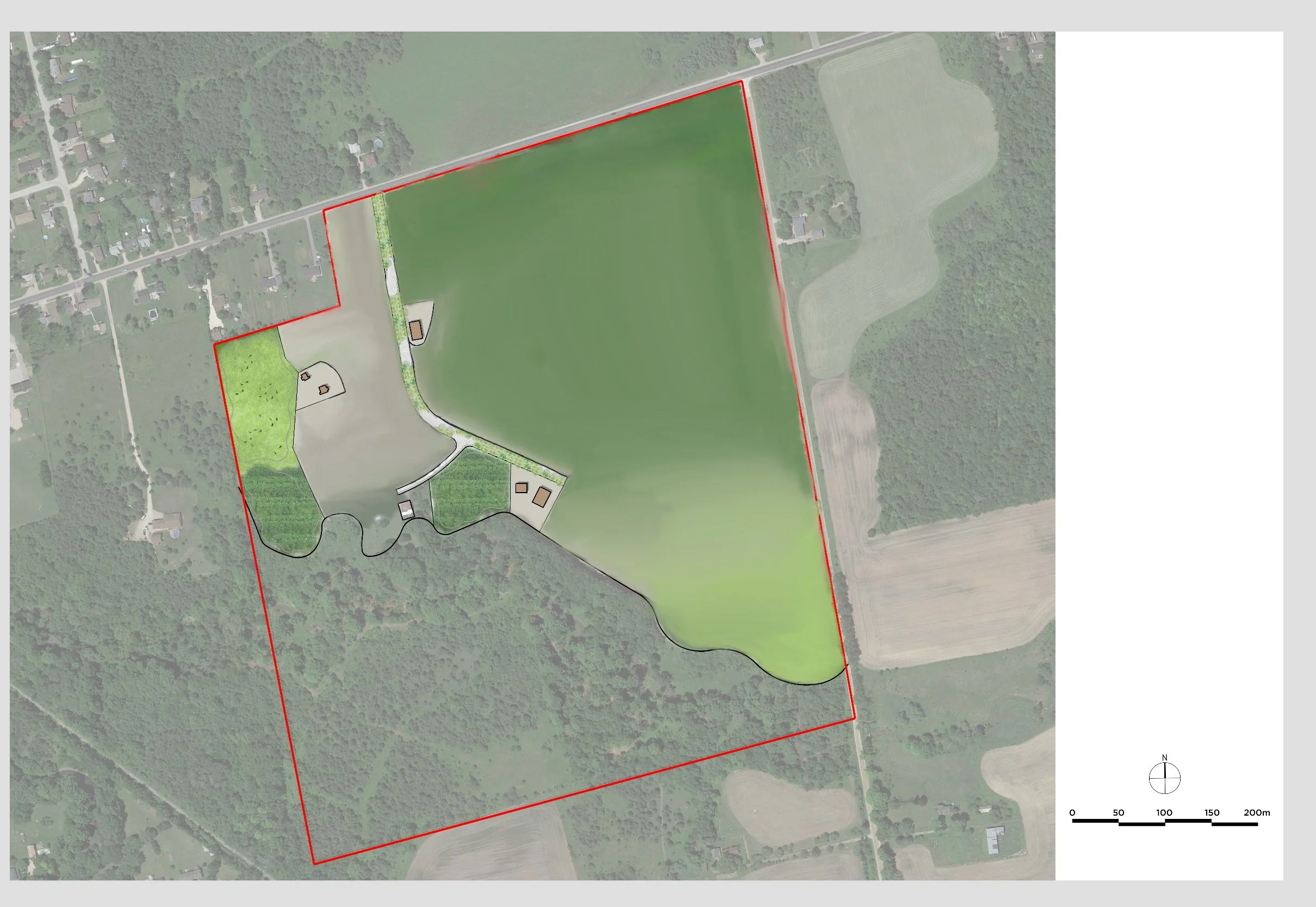
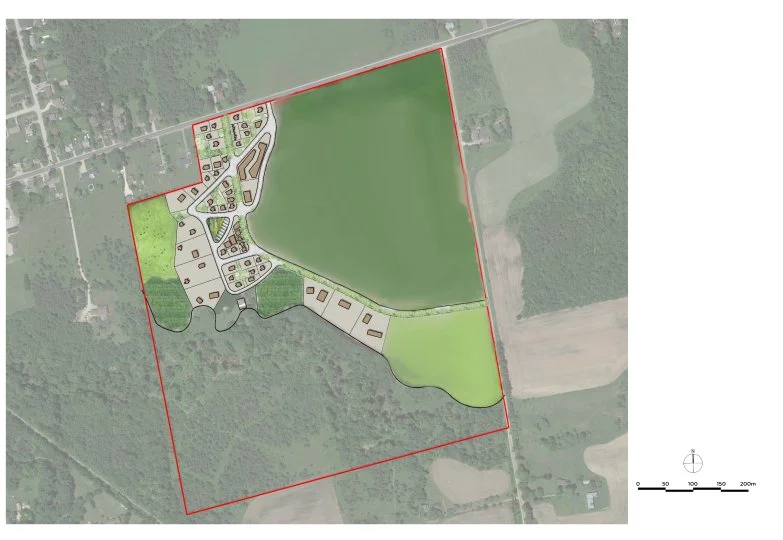
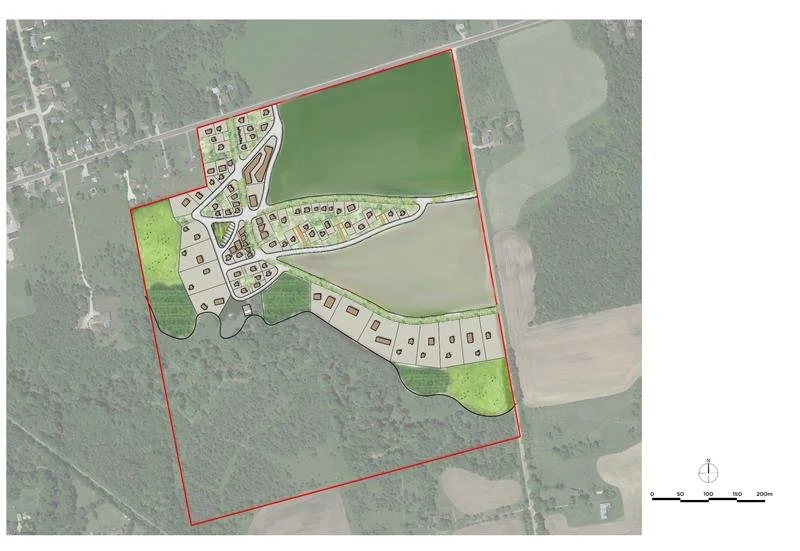
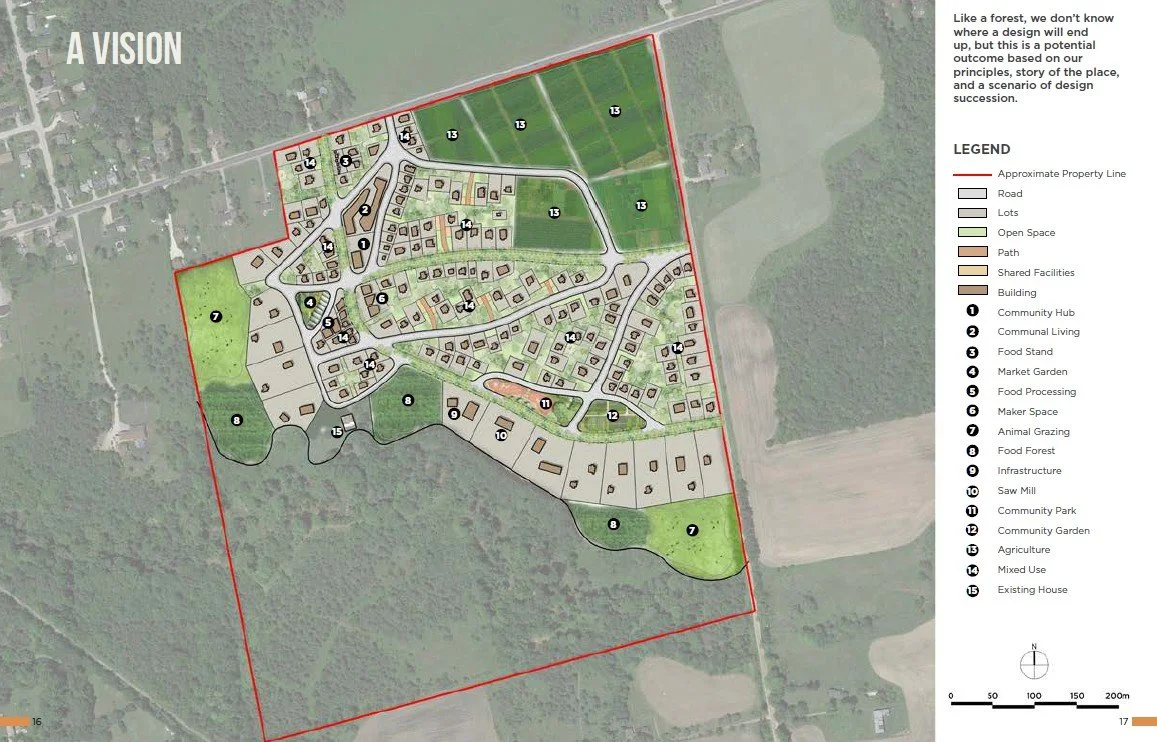
Early seeds include regenerative food production, a gathering centre and shared kitchen, maker and fabrication spaces, low-energy housing, and locally attuned water and energy systems. Over time, these can support new businesses, technology incubation, shared learning, local trade, and a circular economy in which one person’s excess becomes another person’s resource.
Like patches within a forest, different parts of the village can become partly self-sufficient in food, water, and energy while remaining connected through shared infrastructure and reciprocal exchange. Resilience comes from both independence and interdependence.
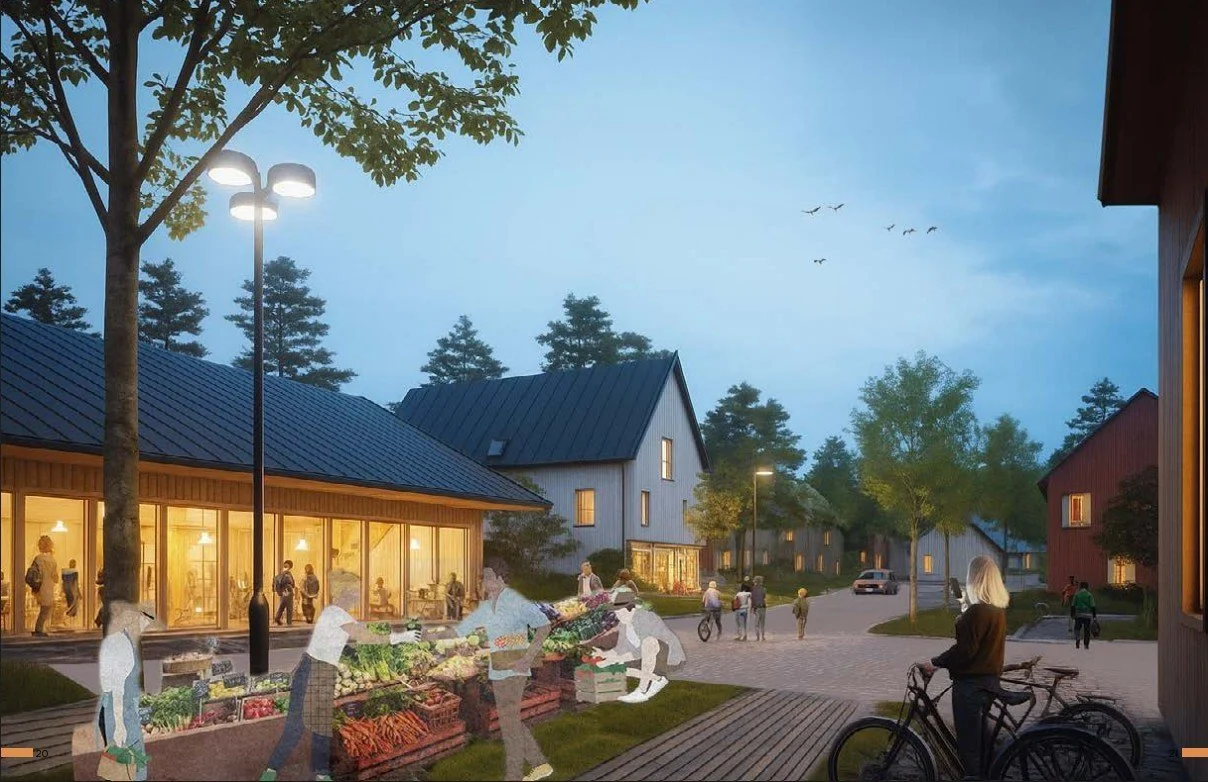
The plan shown here is not a final master plan. It is an early iteration of what could be. It is to grow and eveolve - changing as new people, resources, knowledge, and relationships arrive.
The drawing is not the village. The living process is.
Growing Roads Instead of Drawing Grids
Most communities begin with roads drawn before anyone lives on them. A grid is imposed, locked in, and treated as certainty.
But a grid is only a hypothesis about how people will live.
Working with Mireta Urban Dynamics, we are using biology-inspired algorithms to explore how circulation could emerge from the land itself. The technology draws partly from the behaviour of slime mould: a simple organism capable of growing remarkably efficient networks between resources, balancing travel distance and material use with resilience when part of the network fails.
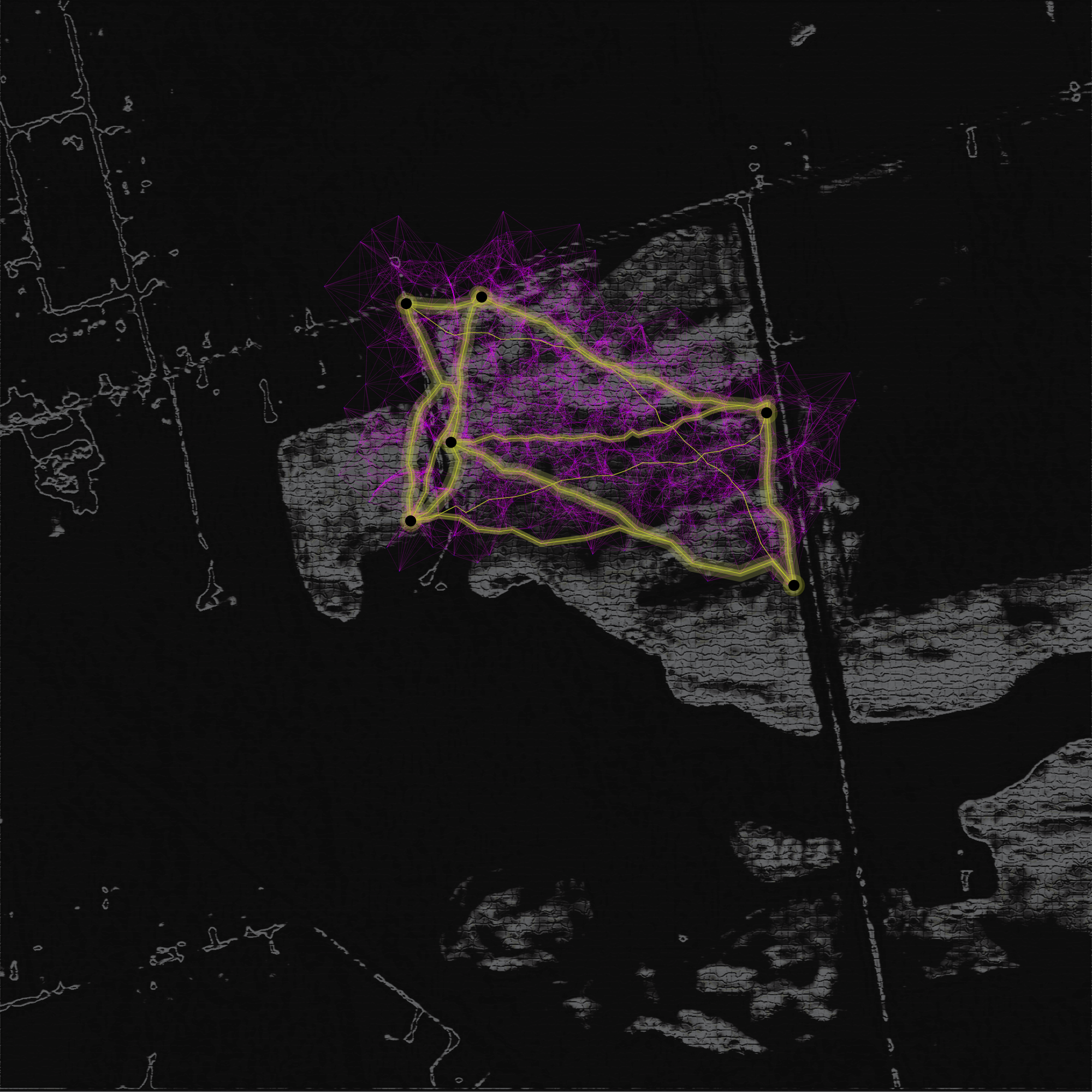
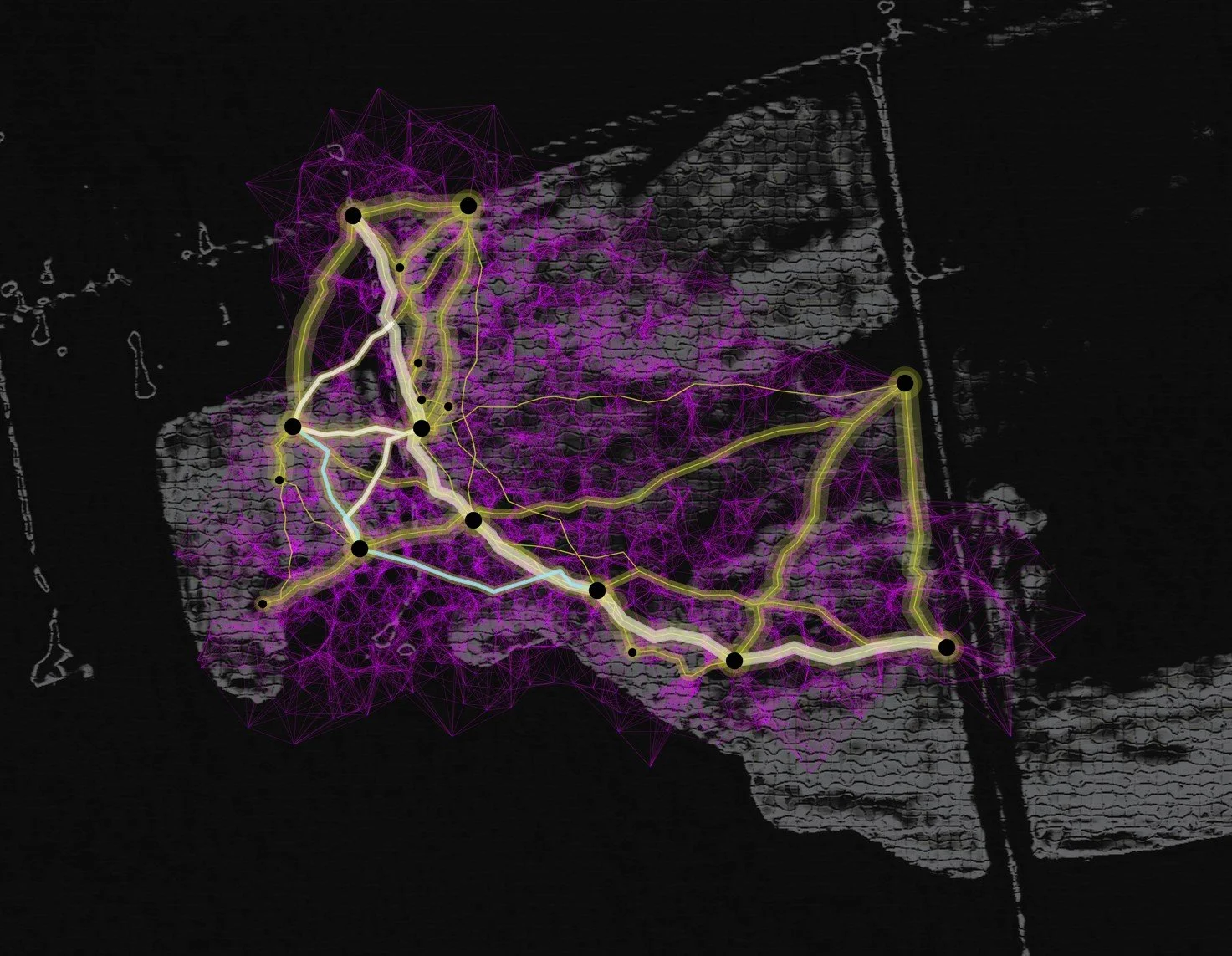
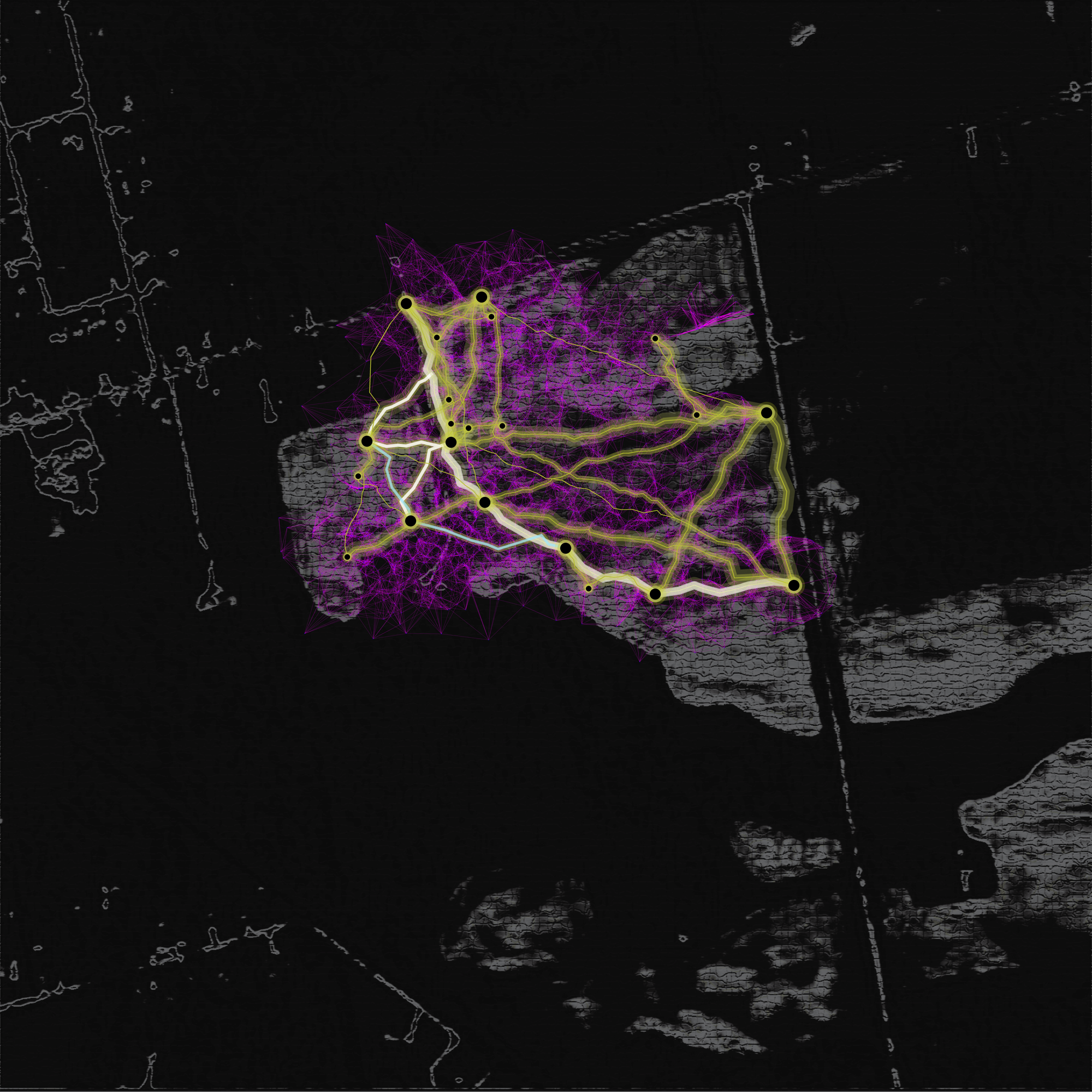
For New Lowell, this allows roads and pathways to grow in response to the landscape and the evolving community—more like mycelium, ant trails, or the desire paths people create before anything is paved. Instead of forcing life into a predetermined network, we can explore networks shaped by real destinations, natural flows, changing needs, and feedback over time.
This is not about allowing an algorithm to design the village. It is about using technology to challenge our assumptions and widen what we believe planning can be.
Canada needs more housing. But it also needs places that give people a reason to care for one another, contribute their talents, create local livelihoods, and build a relationship with the land beneath them.
The 21st Century Village is not a finished answer. It is a living invitation to build the new.
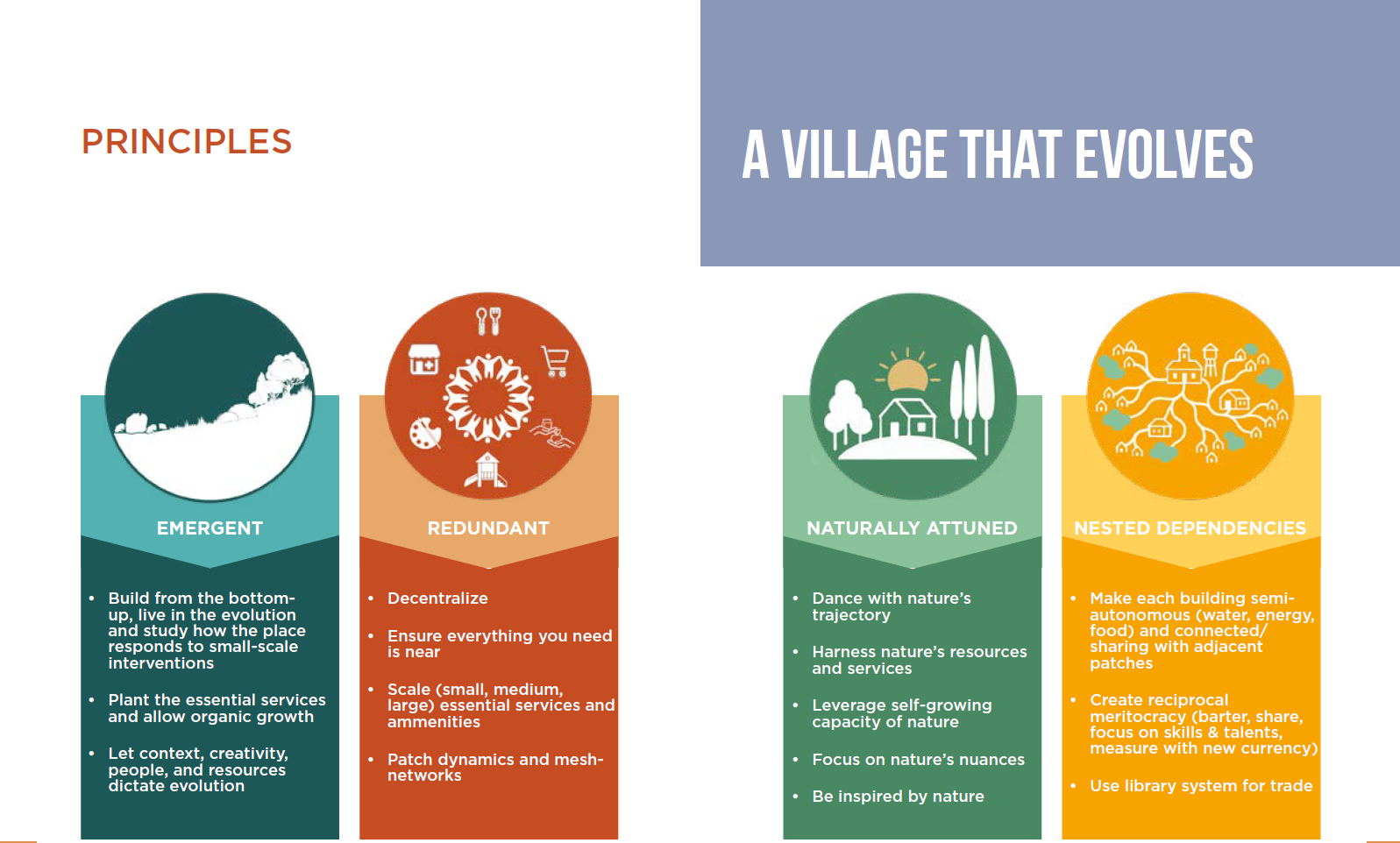
The driving principles for the 21st Century Village